
Articles in this Volume

Research Article Open Access
Constructing dimensions of literary comprehension and interpretation among international students in China—taking contemporary Chinese literature as an example
Article thumbnail
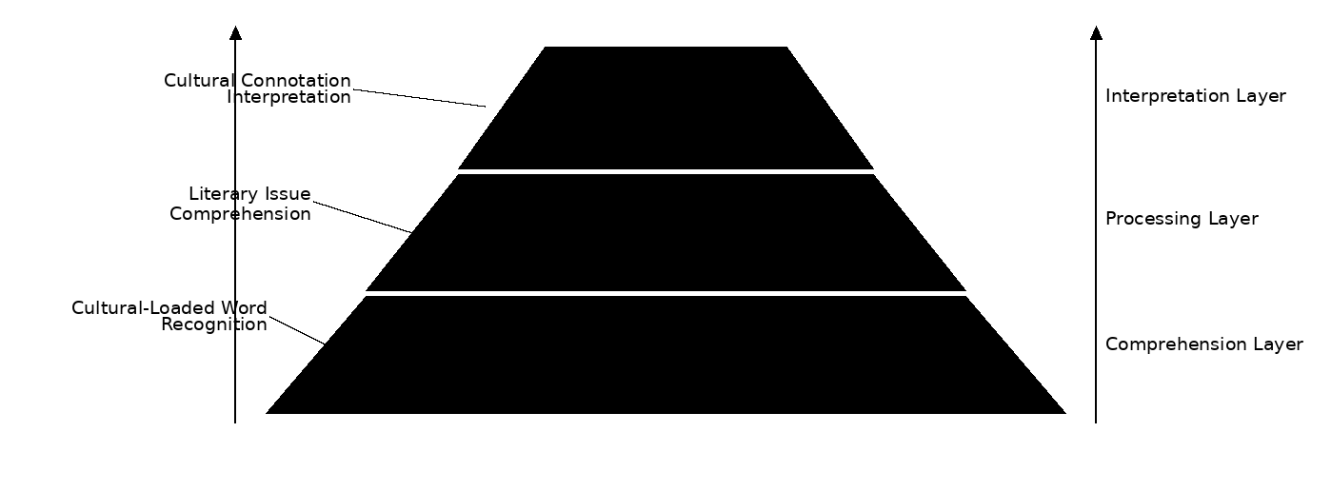
This study focuses on the construction of a dimensional framework for international students' literary comprehension and interpretation abilities. Based on an analysis of the current state of literary pedagogy research in international Chinese education and the dissemination of contemporary Chinese literature, it draws upon Byram's model of cross-cultural communication competence, Deardorff's model of cross-cultural competence, as well as the "Outline for the Chinese Proficiency Test in International Chinese Education", the "Grading Standards for Chinese Reading in International Chinese Education" (Adults), and the "Reference Framework for Teaching Chinese Culture and National Conditions in International Chinese Education", this study proposes and substantiates a three-dimensional competency framework comprising the "Comprehension Layer—Processing Layer—Interpretation Layer." The Comprehension Layer focuses on the identification of culture-laden words and the activation of cultural schemas; the Processing Layer emphasizes the inference of literary themes and cross-cultural comparisons; and the Interpretation Layer aims at grasping deep cultural connotations and creative output. The study further clarifies the influence mechanisms of literary discourse feature variables (transparency of culture-laden words, explicitness of literary themes, and clarity of cultural connotations) and individual learner variables (ethnic background and cultural distance) on the three dimensions. Based on these findings, the study proposes a tiered text selection mechanism, a "three-stage" progressive instructional design, and multi-level assessment methods to facilitate a systematic shift in literary instruction within international Chinese language education from "language skills training" to "the cultivation of literary comprehension and interpretation abilities."
Show more
Read Article PDF
Cite
Research Article Open Access
The practical challenges of inadequate service quality in ice and snow venues and optimization pathways for service upgrading
With the advancement of the national strategy of "engaging 300 million people in ice and snow sports," ice and snow venues, as the core carriers of ice and snow sports, have become directly linked to the high-quality development of the ice and snow industry and the participation experience of the public. Although the number of ice and snow venues in China continues to increase, deficiencies in service quality have become increasingly prominent. These venues currently face a range of practical challenges, including inadequate basic service facilities, insufficient professional competence among service personnel, monotonous service offerings, imperfect operation and management mechanisms, and significant seasonal constraints. This paper expounds the core value of improving the service quality of ice and snow venues and proposes targeted optimization pathways for service upgrading from five dimensions: improving basic service facilities, strengthening personnel training, enriching service content, optimizing operational mechanisms, and overcoming seasonal limitations. The study aims to provide theoretical references and practical guidance for the operation and management of ice and snow venues, thereby promoting quality improvement, efficiency enhancement, and the sustainable development of the ice and snow industry.
Show more
Read Article PDF
Cite
Research Article Open Access
How does the project-based system drive grassroots consultative democracy?—a community practice of institutional transformation
Grassroots consultative democracy, as a micro-level practice carrier of whole-process people's democracy, requires further theoretical interpretation of its institutional innovation pathways. Drawing on the five-layer logic of whole-process people's democracy, this study selects Fangxing Community in Baohe District, Hefei City, Anhui Province as an empirical case to examine the driving role of the project-based system in grassroots consultative democracy. The findings show that the case community has constructed a vertically and horizontally integrated organizational system characterized by "five-level party organization linkage + multi-actor coordination." With the project-based system serving as a key institutional transformation hub, it operates through a triple mechanism of "organization–institution–process" transformation, thereby driving the grassroots consultative democracy system to achieve a four-stage leap: service foundation building → project-based venture creation → organizational cultivation → institutional iteration. Based on the findings, this study suggests that, from an organizational perspective, the policy supply system should be improved, a resource guarantee network should be established, and incentive mechanisms should be innovated. From a institutional perspective, a sound supervision and evaluation system should be developed. From a process perspective, the capacity-building system for consultative democracy should be strengthened, and an innovative knowledge management platform for consultative democracy should be constructed.
Show more
Read Article PDF
Cite
Research Article Open Access
From disciplinary separation to synergistic coexistence: an innovative reform study of interdisciplinary talent cultivation models for English majors
Under the construction background of the new liberal arts, traditional. English major is facing multiple challenges such as the impact of AI technology, escalating social demands, course homogenization, decline in employment competitiveness and so on. The study is conducted from the perspective of collaborative innovation, systematically examine the reform path of interdisciplinary talent cultivation models in the field of English studies. The study suggests that the essence of the crisis in the field of English the structural dislocation between the knowledge production model of a single discipline and the complex social demands. To deal with it, the solution is collaborative innovation through the four dimensions of openness, complementarity, innovativeness and applicability to achieve a rad transformation from "language as a tool" perspective to intercultural competence perspective.
Show more
Read Article PDF
Cite