Articles in this Volume

Research Article Open Access
Emotions, social circles, and platform collusion: a study of youth subcultures in short video contexts
Short video platforms have become deeply embedded in the daily lives of young people, reshaping the production and dissemination of youth subcultures. Based on three rounds of semi-structured in-depth interviews, this study invited young participants to share short videos they are interested in and discuss why they like them, how they interact with them, and whether they share them. Data were analyzed using a three-level coding process. The findings indicate that youth subcultures are not driven by a single factor but are generated through the combined effects of emotional arousal, social circle interactions, and platform rules: algorithms reinforce emotional preferences, symbolic practices construct social circle identities, and platforms along with capital further promote the transformation and absorption of emotional value. The study demonstrates that in the short video era, the formation of youth subcultures exhibits a coexisting mechanism of emotionalization, social circle formation, and platformization.
Show more
Read Article PDF
Cite
Research Article Open Access
Research on cross-border legal protection of unregistered well-known trademarks: practice and prospect in the Guangdong-Hong Kong-Macao Greater Bay Area
This paper provides a detailed examination of the commercial reputation of unregistered well-known trademarks, focusing on the accumulated goodwill arising from fees charged and consumer trust. The regional coordinated development of intellectual property rights and the issues surrounding cross-border legal protection are critically important. The unique "one country, two systems, three judiciaries" framework, coupled with the distinctive structure of the Guangdong–Hong Kong–Macau Greater Bay Area, offers both a practical reference for cross-border protection of unregistered well-known trademarks and a source of complex legal challenges during implementation. The paper systematically reviews and synthesizes the current protection practices in the three jurisdictions. In Mainland China, judicial practice under the Trademark Law increasingly applies territorial standards in a more open manner. In Hong Kong, protection is grounded in the dual-layered Trade Marks Ordinance and supplemented by common law actions against infringement, forming a robust legal defense. In Macau, although the law recognizes that the use of unregistered trademarks may be enforceable, registration remains the basis for stronger legal claims. This study further explores the prominent difficulties encountered in cross-border protection. Drawing on the extensive experience of the European Union, the United States, and ASEAN countries, the paper proposes a multidimensional approach to legal protection of unregistered well-known trademarks, encompassing system development, mechanism design, judicial enforcement, and corporate awareness, with the aim of strengthening China's protection of unregistered well-known trademarks along specific cross-border pathways.
Show more
Read Article PDF
Cite
Research Article Open Access
A comparative study of experiments in the PEP and the Hong Kong Oxford edition of senior high school biology textbooks—A case study in the “molecules and cells” module of the PEP edition
Article thumbnail
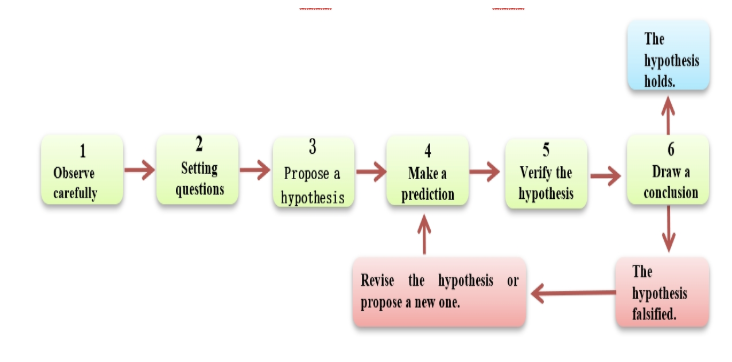
This paper conducts a comparative analysis of scientific methods and three representative experiments—namely, the identification of organic substances, factors affecting enzyme activity, and factors affecting photosynthesis—in the mainland PEP edition and the Hong Kong Oxford edition of senior high school biology textbooks. It explores the characteristics and differences between the two sets of textbooks in terms of their treatment of scientific methods, definitions of the nature of science, as well as experimental design and the selection of experimental materials. Compared with the PEP edition, the Hong Kong Oxford edition provides a more detailed exposition and analysis of scientific methods and incorporates additional content on the nature of science. Its experimental designs are more flexible, procedures simpler and more feasible, and the number of experiments greater with stronger emphasis on practical engagement. It also places greater emphasis on cultivating students' abilities in data processing and analysis, as well as in interpreting results and drawing conclusions. These differences offer valuable insights for the future revision of experimental components in PEP biology textbooks.
Show more
Read Article PDF
Cite
Research Article Open Access
The connotation, influencing factors, and cultivation pathways of leadership among student cadres
Student cadres constitute a core group within the student body in higher education institutions. The development of their leadership is not only essential for individual growth but also a critical component of talent cultivation in universities. This study adopts a literature review approach. By retrieving relevant publications from the China National Knowledge Infrastructure (CNKI) over the past five years and tracing their references, a total of 27 Chinese and 14 English articles were ultimately included for systematic analysis. The findings indicate that the connotation of leadership among student cadres can be summarized into three core dimensions: personal qualities, interpersonal relationships, and teamwork. Its development is influenced by factors at three levels: individual characteristics, organizational environment, and student engagement. The cultivation pathways mainly include curriculum-based approaches, practice-oriented training, and peer education. However, current practices in Chinese universities exhibit several limitations, including insufficient systematic design, lack of professionalization, and incomplete evaluation mechanisms. Future research should focus on exploring localized training models and promoting the extension of leadership education from student cadres to the entire student population.
Show more
Read Article PDF
Cite
Research Article Open Access
To what extent does long-term participation in open-skill sports influence white matter development in the brain compared to closed-skill sports
Article thumbnail
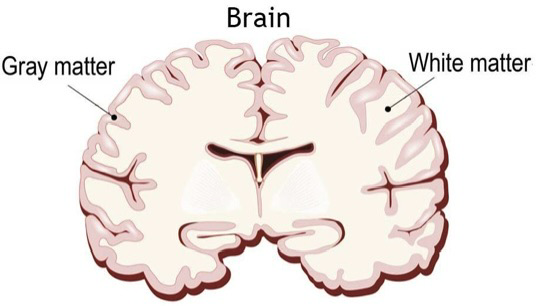
This study examines the long-term influence of open and closed-skill sport on the development of white matter. The work explores the following academic perspectives: neuroscience, sports science, and psychology. It reports on how neuroplasticity and white matter integrity influence attention shifting and adaptation to unpredictable environments. It also examines whether open-skill sports can delay ageing through their effect on white matter. While the current literature supports the notion that acute exercise can influence white matter, I argue that it is chronic exercise that will have the most profound and persistent impact on the body, because short-term interventions are often limited in terms of depth and their effects are typically transient. In addition, this paper also identifies problems that exist in current research and proposes potential improvements, such as enriching the study types and expanding the measurement data. Practical suggestions for future application are provided too. The paper’s key finding is that long-term participation in open-skill sports is indeed associated with enhancements in cognitive function and physiological performance. Further, it may offer significant benefits in mitigating the effects of aging, if this issue can be explored through more in-depth research. Overall, open-skill sports are shown to have great potential to improve brain health and cognitive abilities.
Show more
Read Article PDF
Cite
Research Article Open Access
Research on intelligent technology empowering innovation and entrepreneurship education in universities: practical dilemmas and development paths
The development of an intelligent society drives the upgrading of talent demand, and the misalignment between traditional innovation and entrepreneurship education in universities and social demand has become prominent, urgently calling for intelligent transformation. This study conducts an empirical exploration on this issue. Taking public undergraduate universities in Wuhan as the research objects, this study comprehensively adopts questionnaire survey, in-depth interview, case analysis and other methods, collecting 248 valid questionnaires and completing 25 person-times of interviews. The study finds that 92.1% of teachers and students recognize the importance of this education, but the satisfaction rate is only 35.0%. There are also problems such as empty practice teaching, superficial integration of intelligent technology, and insufficient interdisciplinary collaboration. Based on this, development paths are proposed from six dimensions including curriculum system and practice platform, providing practical references for the intelligent and high-quality development of innovation and entrepreneurship education in universities.
Show more
Read Article PDF
Cite
Research Article Open Access
Good-faith referral: the legal boundary between culturally informed service and discrimination
This paper revisits the legal boundary between lawful referral and unlawful discrimination in service provision by focusing on an undertheorized problem in regulatory and disciplinary settings: the difficulty of distinguishing between culturally informed referrals made in genuine good faith and referrals that operate in a discriminatory or exclusionary manner. Canadian anti-discrimination law properly prohibits denials of service and differential treatment based on protected grounds, including race, creed, sex, disability, sexual orientation, gender identity, gender expression, and family status. At the same time, the legal framework governing service provision and professional discipline must be sufficiently precise to distinguish between referrals rooted in stereotype, aversion, or improper purpose and referrals grounded in cultural knowledge, linguistic awareness, community context, and sincere concern for client welfare. Drawing on the OntarioHuman Rights Code, Ontario Human Rights Commission accommodation principles, Ontario's effective-referral jurisprudence, and Canadian public-law principles of proper purpose, good faith, and reasonableness, this paper argues that identity-conscious referral is not inherently discriminatory. The paper further argues that in disciplinary settings, the difficulty often lies not only in assessing the referral itself, but also in determining whether the regulatory response reflects genuine justice or institutional pettiness. Where a referral is individualized, access-preserving, non-stigmatizing, and directed toward improving the client's substantive access, dignity, trust, and quality of service, it should not be treated as presumptively discriminatory merely because culture forms part of the analysis. The paper proposes a legal framework for recognizing a bounded category of culturally informed good-faith referral and argues that clearer legal recognition of this category would better align anti-discrimination law with substantive equality, procedural fairness, sound institutional design, and the avoidance of regulatory harm arising from institutional blind spots rather than with a purely formal model of sameness.
Show more
Read Article PDF
Cite
Research Article Open Access
Artificial intelligence as a potential empowerment tool for single mothers: opportunities, risks, and structural implications
This literature review examines whether and under what conditions artificial intelligence can function as a meaningful empowerment tool for single mothers. Situated at the intersection of gender, caregiving, labor, social policy, and digital inequality, the review argues that AI has significant potential to reduce some of the structural and everyday burdens disproportionately borne by single mothers. Specifically, AI may support economic opportunity, caregiving coordination, access to information, emotional assistance, and time-saving forms of practical infrastructure. At the same time, the review emphasizes that such empowerment is not automatic. AI's value depends on affordability, accessibility, digital literacy, ethical design, cultural responsiveness, and the extent to which technological systems address rather than reproduce existing inequalities. Drawing on interdisciplinary scholarship published roughly between 2002 and 2025, with particular emphasis on recent work from 2020 to 2025, the review synthesizes literature on empowerment, single motherhood, caregiving burdens, digital inequality, and AI applications in everyday life. It also examines the major risks associated with AI, including bias, surveillance, exclusion, privacy harms, overreliance, and uneven access. The review concludes that AI should not be understood as a substitute for public policy or human support, but as a potentially valuable tool whose empowering capacity depends on justice-oriented governance and inclusive institutional design.
Show more
Read Article PDF
Cite
Research Article Open Access
Institutional gaslighting, cultural gaslighting, and regulatory harm: an examination of misrecognition, authority, and procedural justice
This paper examines institutional gaslighting, cultural gaslighting, and regulatory harm from a legal perspective. It argues that, although "gaslighting" is not ordinarily recognized as a standalone legal cause of action, the concept is analytically useful for identifying patterns of institutional conduct that may already be actionable under anti-discrimination law, administrative law, accommodation doctrine, and principles of procedural fairness. Institutional gaslighting refers to the use of organizational authority, process, and credibility assessments to deny, distort, or minimize a person's account of harm. Cultural gaslighting refers to a related process in which institutions interpret claims through dominant cultural assumptions and, in doing so, treat culturally situated experiences, communicative styles, or interpretations as irrational, exaggerated, or non-credible. These processes can generate regulatory harm not only through formal sanctions, but also through investigative design, credibility framing, denial of context, reprisal, and the normalization of dominant institutional perspectives. Drawing on Canadian human rights and administrative law, including the Ontario Human Rights Code, accommodation principles, and leading Supreme Court of Canada jurisprudence, this paper argues that existing legal doctrine already contains partial tools for addressing these harms. At the same time, current doctrine often under-theorizes the epistemic and dignity-related dimensions of institutional misconduct. The paper concludes by proposing a more explicit legal framework for identifying and addressing institutional reality-distortion in regulatory and administrative settings.
Show more
Read Article PDF
Cite