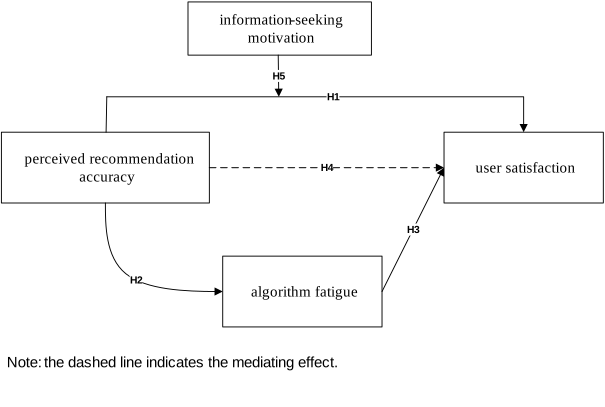
Clarifying the relationship mechanism between perceived algorithmic recommendation accuracy and user satisfaction helps platforms optimize recommendation algorithms in a targeted manner and guide algorithms to be benevolent. Based on the Stimulus-Organism-Response (S-O-R) theory, this study constructs a theoretical model of how perceived algorithmic recommendation accuracy affects user satisfaction on short video platforms. By analyzing 398 valid questionnaires, the conclusions are drawn as follows: First, there is an inverted U-shaped relationship between perceived algorithmic recommendation accuracy and user satisfaction, which first increases and then decreases; second, algorithm fatigue plays a mediating role in the inverted U-shaped relationship between perceived algorithmic recommendation accuracy and user satisfaction; third, information-seeking motivation moderates the inverted U-shaped relationship between perceived algorithmic recommendation accuracy and user satisfaction.