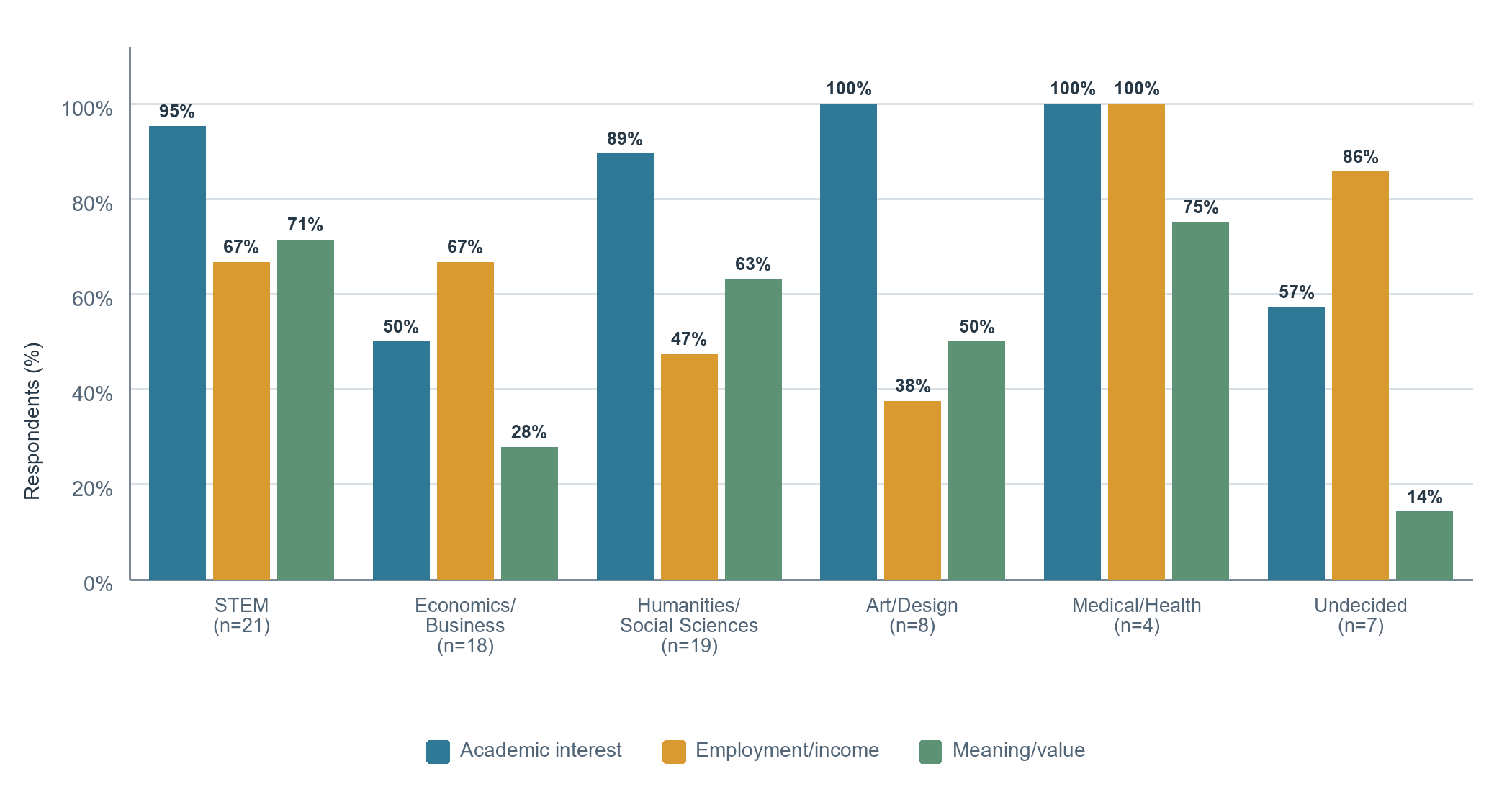
This study examines how economic uncertainty, family expectations and intended university majors are associated with future anxiety among international high-school students in China. An exploratory online survey collected 77 valid responses from students at the researcher's school. Descriptive statistics and cross-tabulations were used to compare six intended-field groups. The findings indicate that major choice operates partly as a strategy for managing employment and income risks, although students also value autonomy, personal interest and meaningful work. Anxiety was visible through concerns about technological change, perceived parental expectations, peer comparison and the possibility of achieving an externally successful but unfulfilling life. Undecided students displayed particularly strong uncertainty, but the survey cannot determine whether anxiety causes indecision. The study argues that career anxiety should be understood not only as an individual psychological condition, but also as a response to labor-market change, family investment and competing expectations about a secure and meaningful future.